
Blog · Industry Insights
Beyond Price & Quality:
What Really Defines the
Right FF&E Partner
The vendors that quietly absorb project pressure — and the ones that pass it on to your team — look almost identical on a spreadsheet. Here's how to tell them apart before you sign.
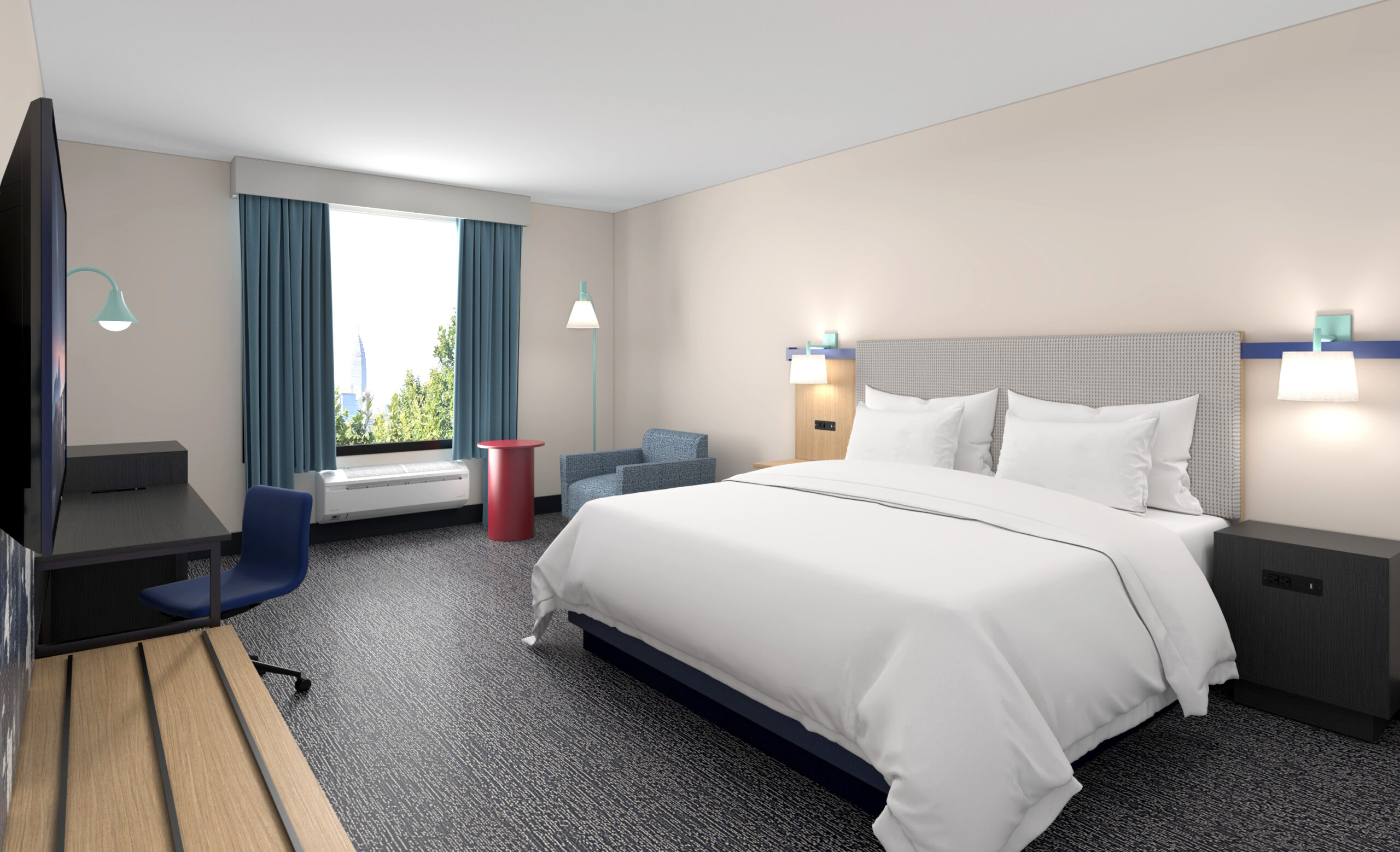
For decades, the conversation around selecting a hotel FF&E vendor has been anchored by two familiar pillars: price and quality. Owners, operators, and design teams scrutinize every line of the bill of quantities, weigh material specifications against brand standards, and benchmark unit costs across competing bids.
These factors matter. But they have never been the full picture — and in today's hospitality landscape, they are increasingly insufficient on their own. Schedules are tighter. Supply chains are more complex. Brand standards are more demanding. And the cost of a delayed opening, a flagged inspection, or a punch list that drags into peak season is measured not just in dollars, but in reputation.
"A strong vendor sells you furniture. A strong partner sells you a delivered, installed, signed-off guestroom on the date you committed to ownership."
Below are seven criteria that experienced hotel owners and operators have learned to evaluate alongside price and quality. They are the factors that separate a transactional supplier from a true FF&E partner — and none of them appear on a line-item quote.
1. Project Management Capability
An FF&E package is not a product — it is a logistics operation. Hundreds of SKUs, dozens of suppliers, multiple freight modes, customs clearances, on-site staging, and an installation window that often overlaps with active construction. The vendor's project management discipline — not their catalog — is what determines whether you open on time.
When evaluating a partner, look past the sales conversation and ask:
- check_circleWho, by name and title, will manage your project from PO to punch list?
- check_circleWhat is their typical project load, and how is escalation handled when things go wrong?
- check_circleHow is progress reported — weekly, by exception, in real time — and through what system?
- check_circleWhat is their documented process for change orders, substitutions, and damage claims?
Vendors who struggle to answer these questions specifically are telling you something important. The best hotel FF&E suppliers in Canada and the USA dedicate named project managers to each engagement — not account managers who hand off to a logistics team mid-stream.
2. Supply Chain Transparency & Resilience
The last several years have made one lesson unavoidable: opaque supply chains are project risk waiting to surface. A vendor who cannot tell you where an item is being manufactured, what the lead time variability looks like, or what their contingency plan is when a port shuts down is not protecting you from that risk — they are simply postponing it.
Look for hotel FF&E procurement partners who can speak credibly about country of origin, factory relationships, freight contracts, and inventory positions. Ask how they handled the supply disruptions of the past few years. The answer reveals more about their operation than any glossy brochure.
"The ability to surface bad news before it becomes a problem is one of the most underrated qualities in a hotel FF&E partner."
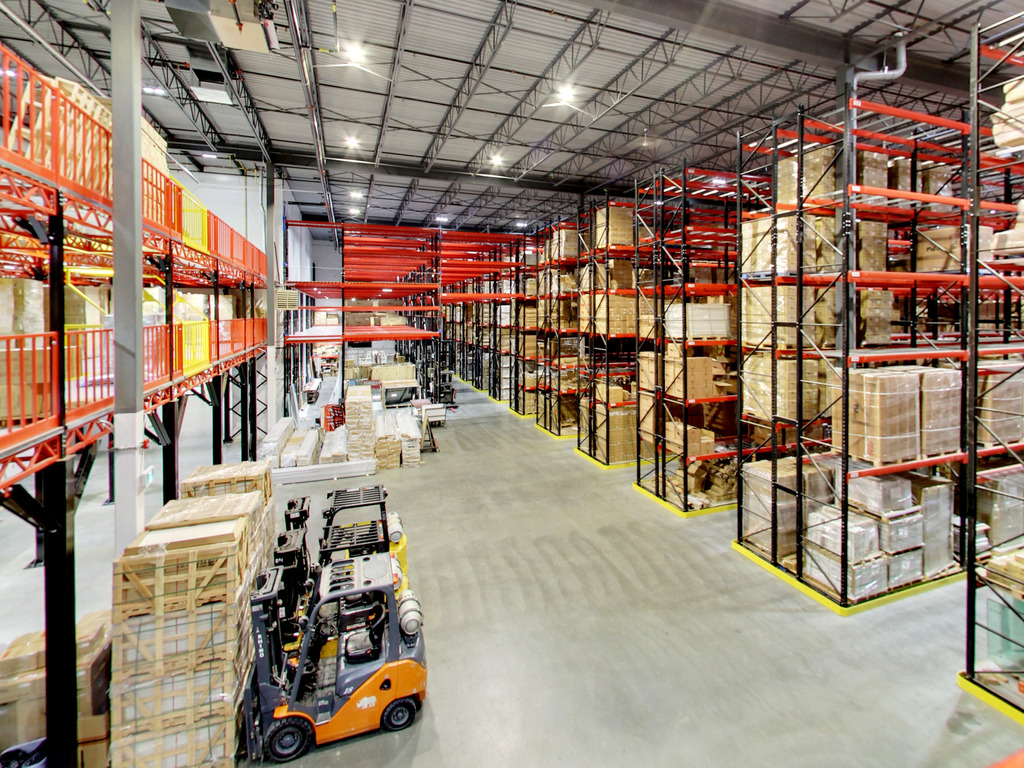
A key differentiator: vendors who own or control their trading relationships rather than relying on third-party brokers. A manufacturer-direct supply chain eliminates the broker markup layer — reducing both project cost and the points where information gets lost or delayed.
3. Brand Standard Fluency
Every hotel flag has a design guide. Every operator has a set of non-negotiables. A vendor who has executed across multiple brands and tiers has internalized the difference between a select-service refresh and a full-service renovation — between an upper-upscale specification and an upscale one. They've seen the comments QA teams flag and the substitutions brand reps reject.
For hotel owners and developers working within approved vendor programs across IHG, Wyndham, Best Western, and Choice Hotels, this matters enormously. Ask:
- check_circleWhich hotel brands are you approved or preferred with?
- check_circleCan you show examples of QA-passed projects for my specific flag?
- check_circleHave you had a substitution rejected by a brand rep — and how did you resolve it?
4. Installation & On-Site Execution
Furniture in a warehouse is not the project. Furniture installed, leveled, inspected, and accepted by the operator is the project. Yet installation is where many otherwise solid hotel FF&E procurement efforts come undone — crews unfamiliar with the property type, scope gaps between vendor and GC, and a punch process that drifts weeks past the planned opening.
Strong FF&E partners either field their own installation teams or maintain long-standing relationships with firms whose work they stand behind. They walk the site, coordinate with the GC, sequence deliveries to match the construction schedule, and are present for the operator's final walkthrough. The difference between this and a freight drop is the difference between a clean opening and a chaotic one.
5. Sustainability & Compliance Posture
Environmental and social compliance is no longer a soft preference. Brands are publishing carbon commitments. Owners are answering to investors with ESG mandates. Municipalities are tightening requirements on materials, finishes, and disposal. A vendor who treats sustainability as a marketing line rather than an operational discipline introduces compliance risk that may not surface until an audit, a renovation, or a refinancing.
- check_circleChain-of-custody documentation for key materials
- check_circleFormaldehyde and VOC compliance certifications
- check_circleMaterial performance ratings appropriate to your property type and market
- check_circleEnd-of-life programs for replaced inventory
Vendors who have invested in this area will answer specifically. Those who have not will answer in generalities.
6. Financial Stability & Continuity
A signed contract is only as good as the company standing behind it. The hospitality FF&E segment has seen vendor consolidations, factory closures, and high-profile failures that left owners stranded mid-project. Before committing a multi-million-dollar package, it is reasonable — and increasingly common — to request basic financial assurance.
- check_circleYears in business and ownership continuity
- check_circleA verifiable portfolio of comparable-scope projects
- check_circleReferences from owners or operators, not just developers
- check_circleWhere appropriate: performance bonding or escrow arrangements
This is not about distrust — it is about due diligence proportional to the size of the commitment. A hotel FF&E package for a 120-room property can represent $500K–$2M in spend. Treating that selection with the same rigor as any other major capital decision is simply good stewardship.
7. Cultural & Communication Fit
The least quantifiable factor is often the most predictive. Over a 12- to 24-month hotel renovation or new build, you will spend more time with your FF&E partner than with most of your internal team. How they handle a difficult conversation, how quickly they respond when something has gone sideways, and whether they treat your project manager as a partner or an obstacle — these qualities compound across hundreds of interactions.
"The vendor who is hard to reach during the courtship will not become easier to reach after the deposit clears."
Trust your team's instincts in early meetings. Response times during the proposal stage are a direct preview of response times during execution. Look for partners who proactively flag problems — not just confirm what you want to hear.
Reframing the FF&E Selection Decision
Price and quality remain essential inputs. They are necessary conditions for any serious vendor consideration. But they are not sufficient. The right hotel FF&E partner is one whose project management, supply chain transparency, brand fluency, installation capability, compliance posture, financial stability, and communication culture together reduce the risk and friction of bringing your property to market.
Hotel owners and operators who weigh these factors deliberately — and who build vendor evaluation frameworks that go beyond unit pricing — consistently report fewer surprises, cleaner openings, and stronger long-term partnerships. In an industry where every day of delay carries real revenue consequence, that breadth of evaluation is not overhead. It is one of the highest-leverage decisions in the entire project.
A practical next step: before your next FF&E procurement in Canada or the USA, build a weighted scorecard that captures all seven criteria — not just price and quality. The exercise of defining what "good" looks like across each dimension will sharpen your selection process and surface trade-offs your team should be discussing in the open.
Quick Reference
Seven Factors to Consider When Choosing a Hotel FF&E Partner
Project Management
Dedicated named PMs, documented change order processes, and real-time progress reporting from PO to punch list.
Supply Chain Transparency
Full visibility into country of origin, lead times, and freight contracts. Manufacturer-direct is the gold standard.
Brand Standard Fluency
Multi-brand approval history and the intuition to catch spec issues before they become costly revisions.
Installation & Execution
On-site coordination, GC alignment, sequenced deliveries, and presence at the operator walkthrough — not just a freight drop.
Sustainability & Compliance
Chain-of-custody docs, VOC certifications, and ESG-ready sourcing that holds up to brand audits and investor scrutiny.
Financial Stability
Verified project history, owner references, and performance bonding proportional to your commitment.
Communication & Culture Fit
Responsiveness during the pitch is a preview of responsiveness during execution. Choose partners who surface problems early.