

 Case Goods
 Soft Furniture
 Seating
 Bed Bases
 Shower Solutions
 Mirrors
 Lighting
 Artwork
 Window Coverings
 Hotel Essentials
 Micro Markets
 Wall Systems
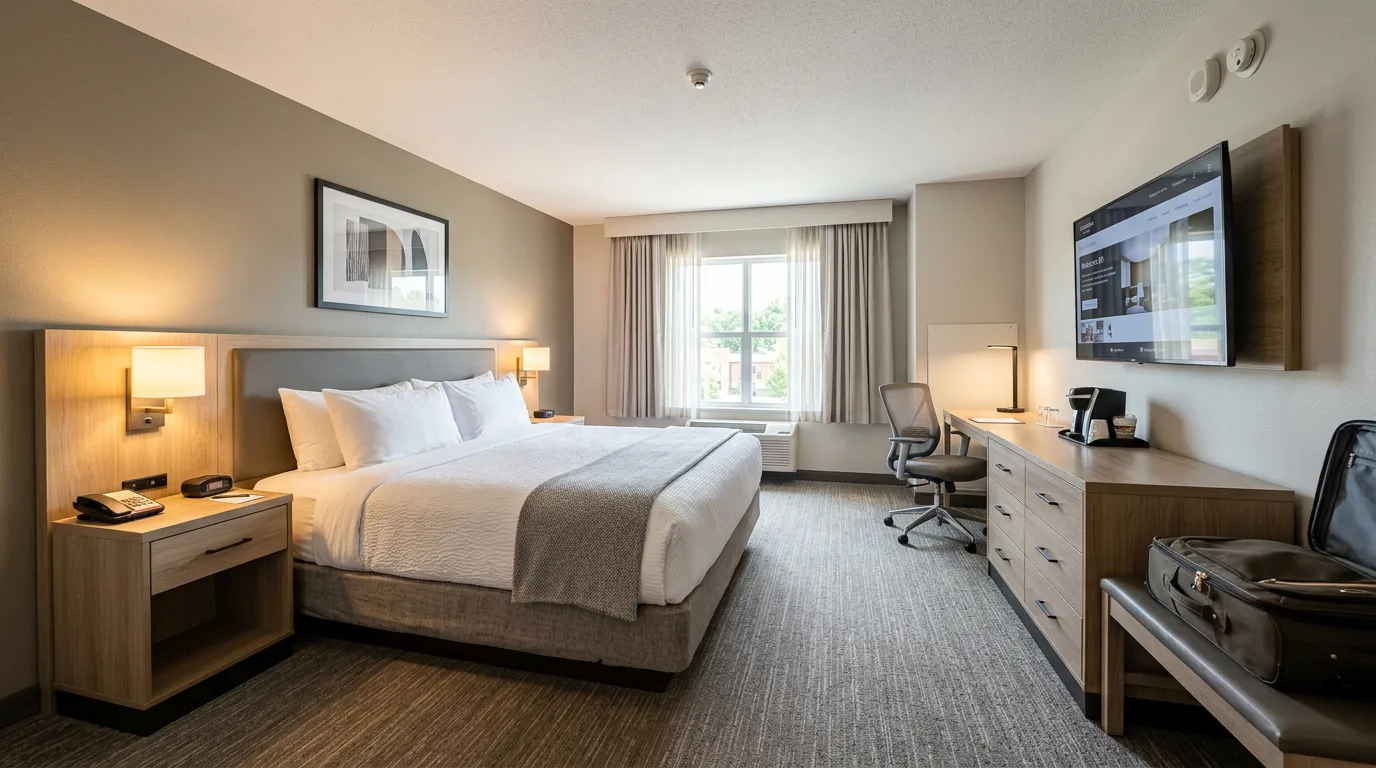
Somewhere on the cheapest case goods quote in your inbox is a line that reads "Headboards: by others." Others, it turns out, means you.
That one line explains a lot about why three quotes for the same 100 rooms can land so far apart. Hotel case goods cost what the package in front of you costs, and each bidder drew that package differently. Some priced the furniture at the factory door; some priced it in your rooms. Some included the headboard.
This post shows why the published per-room numbers don't agree, what actually moves a quote, and how to level three bids in one afternoon. It ends with a checklist you can take into the meeting.
What hotel case goods cost, according to the internet
Start where most owners start: a search. You'll find confident per-room numbers, and none of them match.
| What the page calls it | Tier | Range per room | What it seems to include |
|---|---|---|---|
| "Room furniture" (a factory price list) | Budget (2–3 star) | $1,250–3,300 | Room furniture incl. beds, seating, desks, wardrobes; basis not stated |
| "Furniture" (a manufacturer's 2026 cost guide) | Midscale | $4,200–5,600 | Furniture (scope not stated) |
| "FF&E" (a contractor's 2026 guide) | Mid-scale | $8,000–15,000 | All furniture, fixtures and equipment |
| "FF&E" (a 2026 budget framework) | Midscale | $12,000–25,000 | All FF&E, product cost only (the guide adds freight, duty and installation on top) |
Source: vendor-published guides found on page one of Google, September 2026. Only one cites a source for its furniture or FF&E figures, and we couldn't trace those to HVS. Shown to illustrate the scope problem, not as benchmarks.
For the same "midscale" label, the midpoints differ by nearly four times. Nobody here is necessarily wrong. They're measuring different things: guestroom furniture versus all FF&E, with or without freight and installation, one guide's idea of "midscale" versus another's.
The independent sources don't settle it either. The HVS 2026 U.S. Hotel Development Cost Survey puts the median development cost of a select-service hotel, across 2025 projects, at $200,000 a room. That's useful for scale, since case goods are one slice of it. For the size of that slice, HVS points you elsewhere:
"Construction and furniture, fixtures, and equipment (FF&E) design and procurement firms are the best sources for obtaining hard costs and FF&E costs for a specific hotel project." (HVS, July 2026)
In other words, the number lives in the quotes. So the skill that matters is reading them.
Five things that move a case goods quote
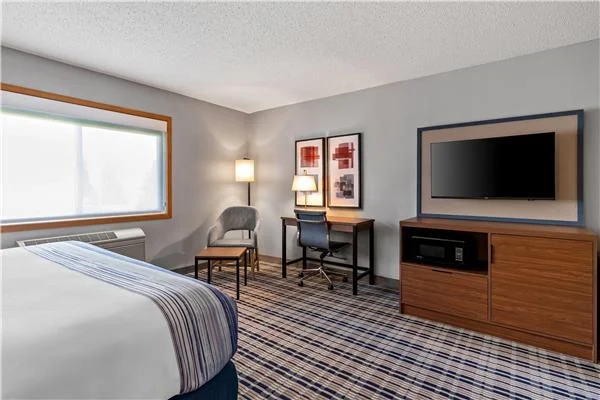
Case goods are the hard, non-upholstered furniture in a room: headboard, night tables, dresser or TV unit, desk, wardrobe or open closet, luggage bench. Here's what changes the number, roughly in order of how often it catches owners out.
- The package. Which pieces, how many, for which room types? A king room and a double-queen room carry different headboards and night-table counts, so the room mix matters. Watch for the pieces that drift in and out: headboards, wardrobes versus open closets, bed bases, and vanities. Vanities often sit on a separate cabinetry line and sometimes appear in only one bid.
- The spec. Thermally fused laminate (TFL) is the workhorse. High-pressure laminate (HPL) goes on desk and vanity tops that take a beating. Wood veneer is the upscale upgrade. Below the surface: the core, the edgebanding, the drawer box and the glides. Two dressers that look identical in a rendering can be very different dressers after a few years of housekeeping.
- The basis. This is where the finish line is. An ex-works (EXW) price stops at the factory door, and everything after that is yours. An FOB price goes one step further: the goods loaded on the ship at the origin port. A landed price includes getting them to you. An installed price ends with the piece in the room. Freight has its own traps, which we covered in what's hidden in an FF&E logistics quote.
- Duty. The fastest-moving line in 2026. More on it below.
- Site services. Receiving, storage, delivery to the floor, installation, removing packaging and old furniture, attic stock (spare pieces for future damage). Each is small. Together they're the difference between a quote and a budget.
Duty in 2026: ask what was assumed, and when
As of September 2026, US duty on imported furniture has changed more than once this year. On 20 February 2026 the Supreme Court struck down the 2025 emergency (IEEPA) tariffs. A temporary tariff filled the gap until 24 July, when new Section 301 tariffs from USTR took effect on goods from about 60 economies. Looking at hotel construction costs, HVS's 2026 survey names tariff policy as "the primary catalyst behind renewed cost pressure."
What that means for your quotes: the rate depends on where the goods are made, and a quote priced in June may rest on a different duty regime from one priced in September. Vanities and cabinets also carry their own US duty, currently scheduled to rise on 1 January 2027, which is one more reason they're often quoted separately.
You don't need to become a customs expert. You need three answers from every bidder: what duty rate did you assume, for which country of origin, and on what date? Duty is usually calculated on the goods' value before freight; your customs broker will confirm how it applies to your order. In Canada, too, the rate depends on origin and trade agreements.
A quote without its duty assumption is a quote with an expiry date you can't see.
Worked example: levelling three quotes for a 100-key select-service PIP
Take a typical 100-key select-service hotel doing a guestroom case goods PIP (the brand's required renovation list): 60 king rooms, 40 double-queens. Three bidders respond.
The numbers below are illustrative index figures, not prices. Quote A's headline is set to 100 and everything else is relative to it. Every adjustment is an assumption we made to show the mechanics. Where we add duty (Quote A only), it's one assumed figure. B and C are taken at their own duty assumptions, which is exactly what the checklist asks you to confirm.
- Quote A is FOB origin port (loaded on the ship, nothing after that), TFL throughout, headboards "by others".
- Quote B includes headboards and duty, delivered to port-city warehouse. Installation not included.
- Quote C includes everything delivered to site, adds vanities, and specifies veneer on the headboards and tops. Installation not included.
| Line | Quote A | Quote B | Quote C |
|---|---|---|---|
| Headline as quoted | 100 | 128 | 150 |
| Headboards (A: "by others") | +14 | incl. | incl. |
| Vanities (only C quoted them; moved to their own line) | — | — | −17 |
| Ocean and inland freight | +9 | +3 (inland only) | incl. |
| Duty and brokerage | +12 | incl. | incl. |
| Receiving and storage | +4 | incl. | +4 |
| Installation and debris removal | +10 | +10 | +10 |
| Attic stock | +2 | +2 | incl. |
| Same scope, landed, installed | 151 | 143 | 147 |
Source: illustrative. All figures are assumptions for this example, not market prices and not Nerval prices.
At the headline, C looked 50% more expensive than A. Levelled, A is the most expensive of the three, B is the least, and the whole spread is 8 points, about 6%. The 4 points left between B and C are a spec choice: C is veneer, B is TFL. That's now a decision you can make on purpose, instead of a surprise you discover in the change orders.
It doesn't always go this way. Sometimes the low quote really is the low quote. Levelling is how you find out which one you're holding. And if the vanities matter to the PIP, get them priced from every bidder on their own line.
The bid-levelling checklist: questions for every bidder
Send these with the RFQ (the request for quotation), or take them into the meeting. Same questions, every bidder, in writing.
- check_circle Scope: List every piece, per room type, with quantities. What is marked "by others" or excluded?
- check_circle Spec: Surface (TFL, HPL, veneer), core, edgebanding, drawer box and glides, top material. Is this the brand's approved spec, or an "equal"?
- check_circle Basis: Is this price at the factory door (EXW), loaded at the origin port (FOB), delivered to site, or installed?
- check_circle Freight: Are ocean and inland freight both included? Is the number fixed or an estimate?
- check_circle Duty: What duty rate did you assume, for which country of origin, and on what date? Are brokerage and customs fees included?
- check_circle Site services: Who receives, stores and delivers to the floor? Is installation included? Packaging and old-furniture removal?
- check_circle Attic stock: How many spare pieces, and of what?
- check_circle Lead time: From what event (deposit, shop drawing approval) to what event (shipped, on site)?
- check_circle Warranty: How long, and what does it cover?
- check_circle Validity: How long does this price hold, and what can change it?
For where this fits in the wider buying process, see our hotel FF&E planning and procurement guide.
Where Nerval fits
We're one of the firms that write those quotes, so here's how we answer most of that checklist.
Our hotel case goods are made in our own global production facility, where Nerval employees run quality control on the ground and oversee container loading. We're an approved vendor for 18 hotel brands, and case goods is approved scope with IHG, Wyndham and Choice (see the brands we build to). We're also an endorsed supplier for Best Western in Canada.
Send us your brand, room count and PIP, and your account executive comes back with a line-item quote, so every piece is listed. Freight is quoted all-in, ocean plus inland. Delivery and installation are available. Case goods carry a 10-year limited warranty, and overseas lead time is 12–14 weeks from order to delivery; your account executive will confirm it for your project.
Ask us every question on the checklist above. That's what it's for.